High Wycombe might be famous for its furniture, but there’s a whole lot more hidden history to this town than you might believe.
Nestled in the heart of the town centre are historic gems that tell the story of Wycombe’s past — from medieval market houses to the places where Winston Churchill once stood.
Let me take you on a little historical tour of High Wycombe with six spots that you absolutely should not miss…
1. The Guildhall (1757)
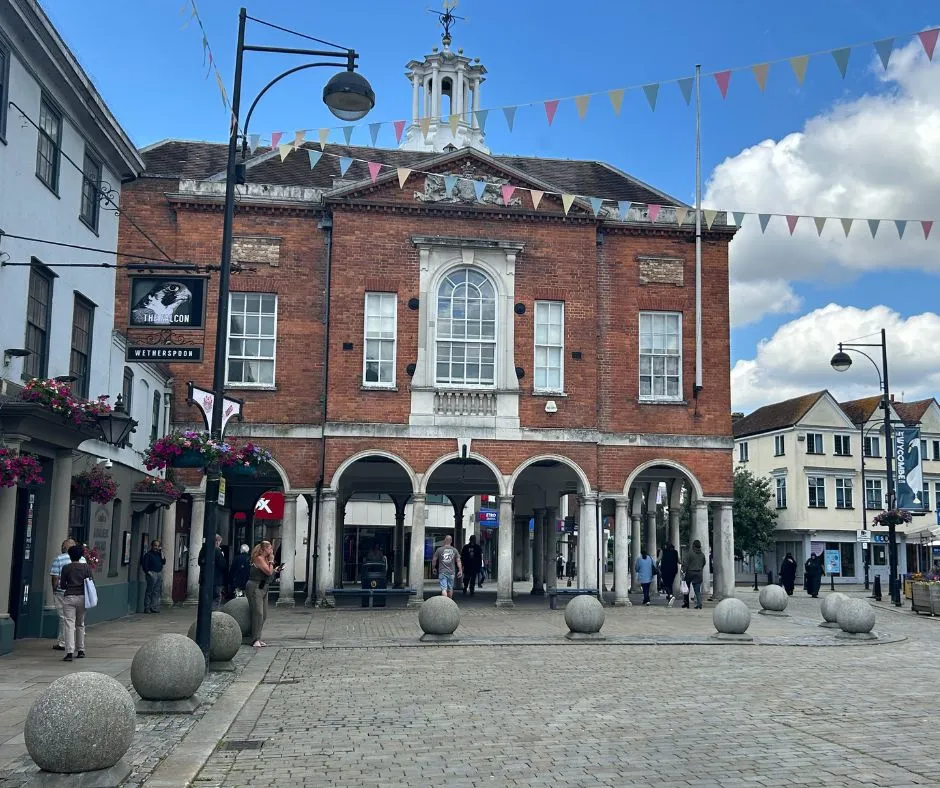
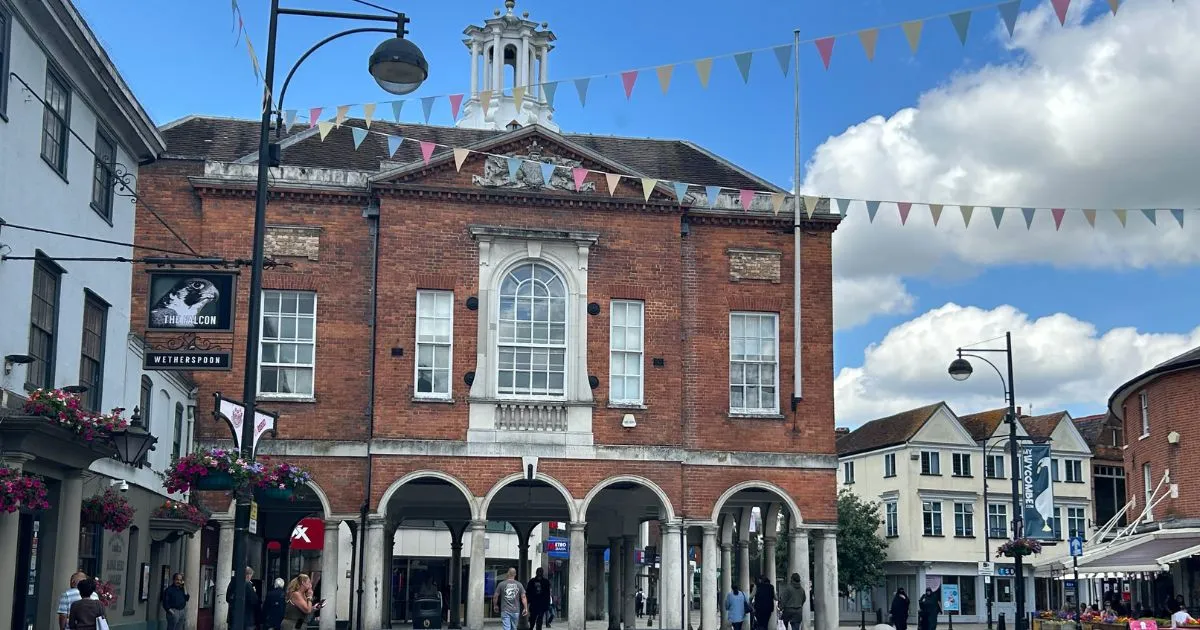
Let’s start with the building that your eye is immediately drawn to when you walk down the High Street.
The Guildhall, built and given to the town in 1757, is one of the finest examples of civic architecture in Wycombe. It was designed by Henry Keene, replacing an earlier structure in the same spot, and funded by the Earl of Shelburne — MP for our town back in the 1760s and even, briefly, Prime Minister from 1782-3. He lived at Loakes Manor — now Wycombe Abbey school — and helped negotiate the peace treaty that ended the American War of Independence.
Inside the Guildhall is a striking stained glass memorial window — installed in 1923 — made to commemorate the return of 5,000 Wycombe men who served during the First World War.
Fun fact: The Guildhall was once the centre of town life. It was a meeting place for the local council and also housed market stalls beneath its arcaded ground floor. It’s still used today as the site of the Mayor Making ceremony every year, when the town ‘weighs in’ the new Mayor.
2. The Little Market House (aka The Pepperpot) (1604/1761)
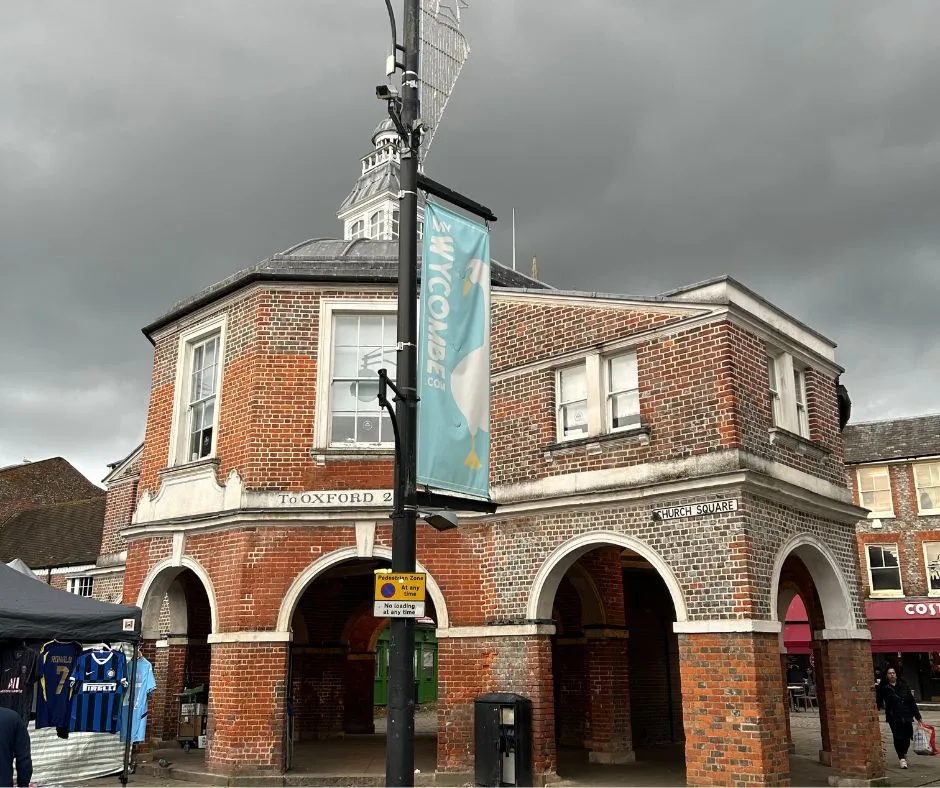
Ah, the Pepperpot — you can’t miss this quirky little structure that sits right at the heart of the town. Don’t be fooled by its small size. This historic building is actually one of Wycombe’s oldest and most iconic landmarks, dating back to 1604.
Originally, it was a market house where merchants would set up their stalls. The famous architect Robert Adam gave it a facelift in 1761, transforming it with a beautifully designed dome turret and octagonal shape that’s still in place today.
You can’t buy pigs here anymore though — it’s home to some council offices instead!
3. The Wheatsheaf at 2/3 High Street (1399)
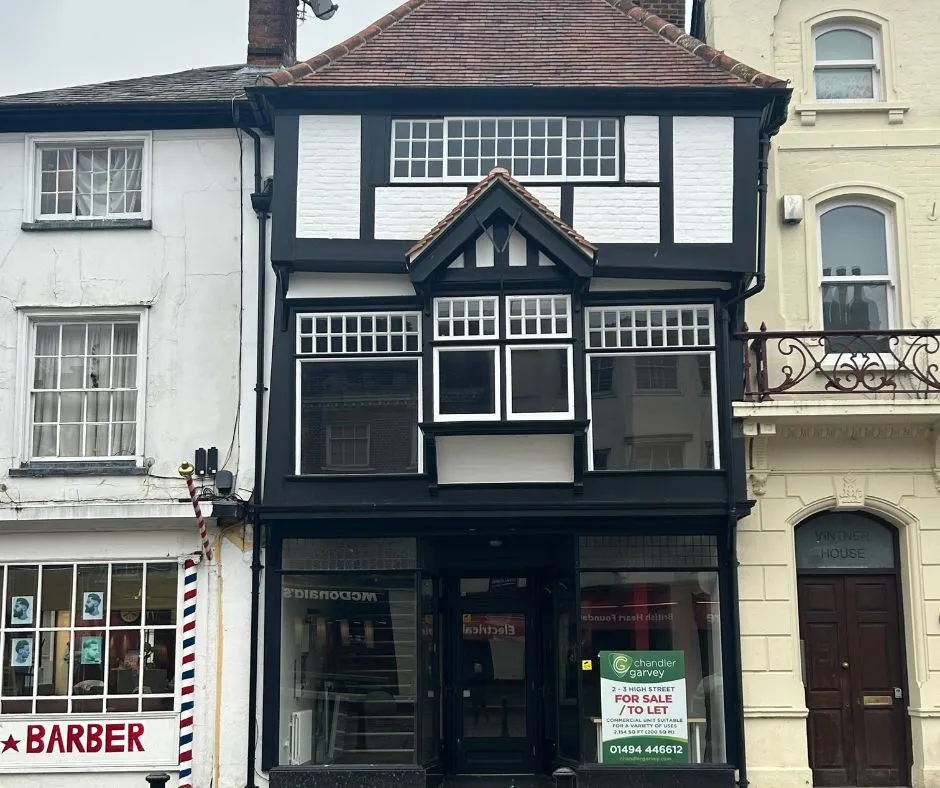
If walls could talk, the Wheatsheaf would have a lot to say. This little gem on High Street has been around since 1399 — yes, you read that right, 1399!
Over the centuries, it’s served as an inn, a meeting place, and a vital part of Wycombe’s social scene.
Now, it’s a local heritage site that’s been lovingly restored by the Buckinghamshire Historic Buildings Trust. It’s not just a beautiful building — it’s also one of the oldest secular structures in Wycombe, second only to the parish church.
Since the restoration, it’s seen life as a bar and an exhibition space. Unfortunately now, it’s gone back to auction — I know we’re not the only ones who think there’s a missed opportunity here to create a community space for the town, showcasing our local treasures and helping people learn more about Wycombe and its history.
4. St John the Baptist Hospital (c.1180)
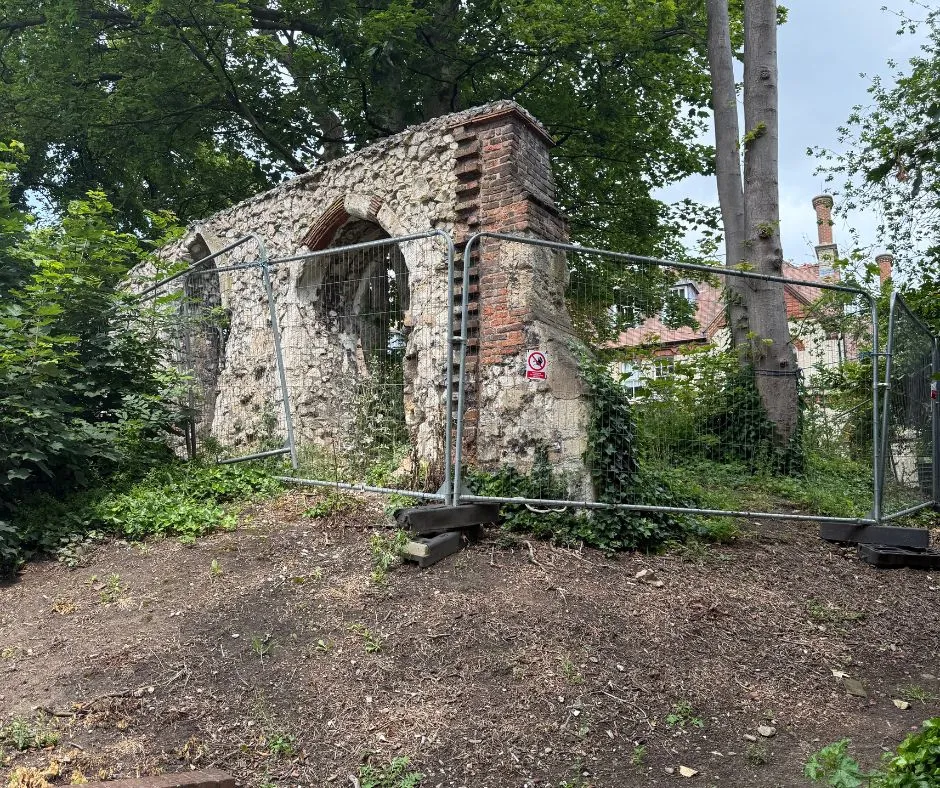
If you’re looking for something with a bit more of a ‘medieval vibe’, head over to St John the Baptist Hospital on Easton street — a scheduled monument.
Founded in 1180, this historical gem was once a hospital run by lay brothers, built as a refuge for the poor and infirm. Henry VIII’s Dissolution of the Monasteries saw the land acquired by the council to build a school and so the Royal Grammar School was founded here in 1562.
The surviving remains of this institution should be a real treat for history buffs: Historic England has described it as a “rare example of a medieval hospital surviving in a town”. You can still see an aisled hall and chapel from the original building, showcasing some pretty incredible 12th-century architecture, and there are archaeological remains below the surface too.
Unfortunately, the site looks quite forgotten right now — it’s been fully cordoned off as I understand it’s awaiting a survey, and there are lots of overhanging trees here too. It would be great if the powers-that-be in Wycombe could recognise the value of such a historic site and put some effort into showing off these heritage treasures.
5. Pann Mill (13th Century)
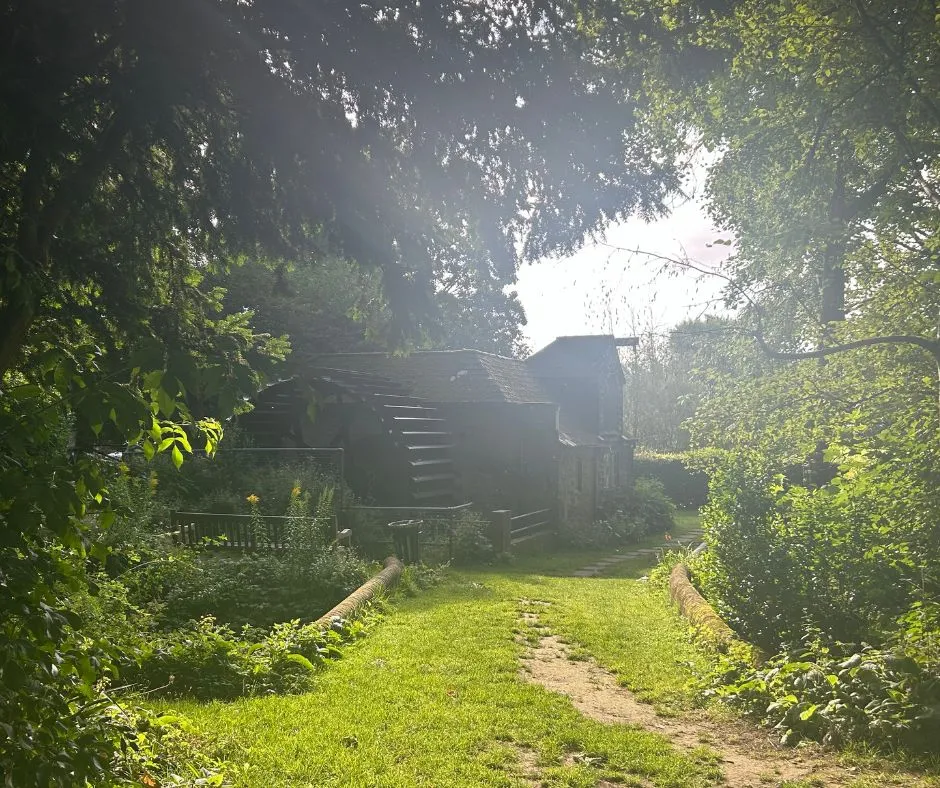
For a little taste of nature and history all rolled into one, Pann Mill is the place to be. Located just a short stroll from the town centre — and almost opposite the St John site — this charming water mill dates all the way back to the 13th century.
While the current structure you see was built in 1759, the original mill was serving the town’s milling needs long before then. Over the years, Pann Mill has gone through numerous renovations, but it’s still a working mill today.
It sits on the River Wye and has played a key role in Wycombe’s history, especially when it comes to grinding grain for the local population. These days, it’s a wonderful heritage site that offers a glimpse into how milling worked in the past. Make sure you check out their open days, held regularly through the spring and summer. It’s a great spot to get a sense of how Wycombe’s industrial past ties into its present.
6. The Red Lion Statue
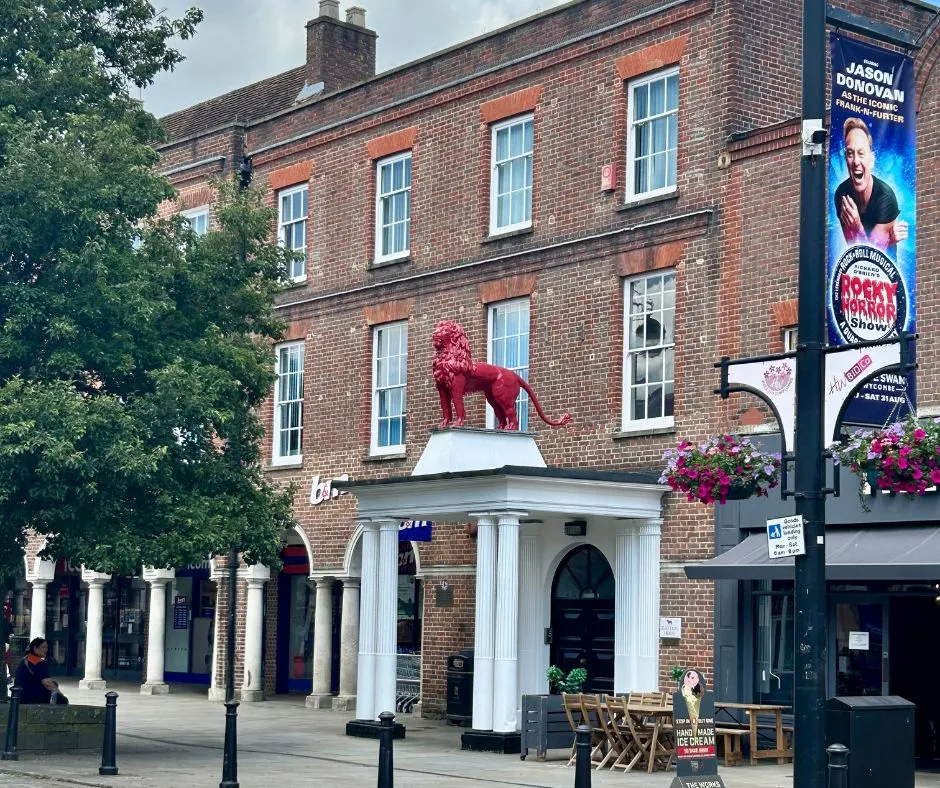
For many, the Red Lion on the High Street is one of the icons of Wycombe.
The Red Lion Coaching Inn that it used to stand above might not be in situ anymore, but it still holds a special place in Wycombe’s history. First mentioned in 1482, this pub was once one of the most famous in town — a coaching inn where travellers would stop for a pint and some rest. Its portico — where the lion stands — was the place where Winston Churchill stood to deliver an impassioned speech in 1945, rallying the people during a time of great change.
The Red Lion closed its doors in 1969 but the lion itself lives on — the original is on display in Wycombe Museum and its second iteration was restored in 2017.
And there you have it — six historic sites in High Wycombe that are more than just dusty old buildings.
They’re full of life, full of stories, and they’ll give you a true sense of what makes Wycombe such a special place to call home.
Next time you’re wandering around town, take a moment to appreciate these hidden treasures. History is right on our doorstep!
Making a day of your visit? Our restaurant guide can help you find somewhere to eat after exploring Wycombe.
Enjoyed this article? Share it!